
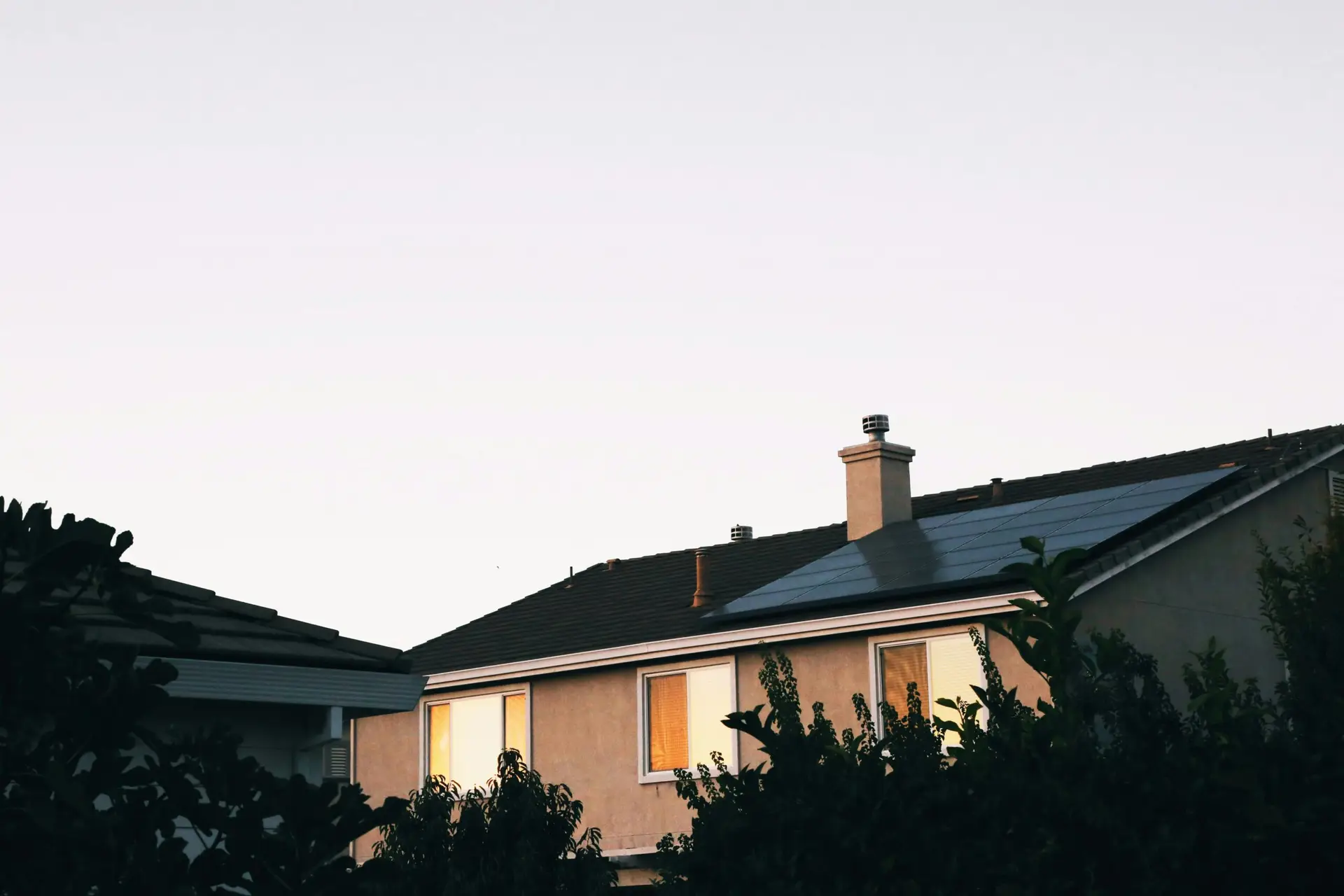
Everything you need to know about going solar in NI – from costs and grants to installers and payback periods. Independent advice from the team that’s helped 3,000+ homeowners save an average of £800 on their solar installation.
Quick Summary: Solar Panels in Northern Ireland
Average Cost: £5,500 – £9,000 for a typical 4kW system
Annual Savings: £514 on average (up to £800+ with battery storage)
Payback Period: 9-11 years
Available Grants: 0% VAT (saves £1,000-£1,800), NISEP for businesses (20% off)
Weather Impact: NI gets 1,600 sunlight hours yearly – panels work even on cloudy days
Installation Time: 1-3 days on-site, 4-6 weeks from survey to switch-on
Why Solar Panels Make Sense in Northern Ireland
Northern Ireland might not be the first place you think of when someone mentions solar power. We’re known for our rain, our changeable weather, and skies that are more often grey than blue. Yet despite this, solar panels are becoming one of the smartest home improvements you can make in NI.
Here’s why thousands of Northern Irish homeowners are making the switch:
The Energy Crisis Hit NI Hard
Electricity prices in Northern Ireland have risen dramatically over recent years. Power NI customers have seen bills increase by over 65% since 2020, and with our reliance on imported energy, we’re particularly vulnerable to global price fluctuations.
When you install solar panels, you’re essentially locking in a portion of your electricity costs for the next 25-30 years. While grid electricity prices continue to rise, the cost of generating your own solar power stays at zero once the system is paid off.
The Financial Numbers Stack Up
Let’s be honest – most people consider solar panels because of the money. And the numbers genuinely work in Northern Ireland:
- Average annual savings: £514 (based on a typical 4kW system)
- Lifetime savings: £15,000-£25,000 over 25-30 years
- Break-even point: 9-11 years – leaving 15+ years of pure profit
- Property value increase: Homes with solar panels typically sell faster and for higher prices
With the recent 0% VAT on solar installations (introduced in May 2023), plus rising electricity costs, the return on investment has never been better.
Environmental Impact
Beyond the financial benefits, solar panels significantly reduce your carbon footprint. A typical 4kW solar system in Northern Ireland prevents approximately 1.5 tonnes of CO2 emissions annually. Over 25 years, that’s equivalent to planting hundreds of trees.
For homeowners who want to contribute to Northern Ireland’s climate targets while saving money, solar represents a genuine win-win.
Energy Independence
There’s something deeply satisfying about generating your own electricity. During summer months, many NI homeowners generate more electricity than they use, reducing their reliance on the grid substantially.
Add battery storage to the mix, and you can store excess power for evening use – further reducing what you need to buy from Power NI.
How Much Do Solar Panels Cost in Northern Ireland?
This is usually the first question we get asked, and rightly so. Solar panels are a significant investment, so understanding the true costs is essential before you commit.
Current Price Ranges in NI (December 2025)
| System Size | Number of Panels | Typical Home Size | Price Range | Average Cost |
|---|---|---|---|---|
| 3kW | 8-10 panels | 1-2 bedroom | £4,500 – £6,500 | £5,500 |
| 4kW | 10-12 panels | 3 bedroom | £5,500 – £8,500 | £7,000 |
| 5kW | 13-15 panels | 4 bedroom | £6,500 – £9,500 | £8,000 |
| 6kW | 16-18 panels | 5+ bedroom | £7,500 – £11,000 | £9,000 |
Important: These prices include installation, all equipment (panels, inverter, mounting), and VAT (which is currently 0%).
What Affects the Price?
Several factors influence what you’ll actually pay:
1. System Size Larger systems cost more but often provide better value per kW. A 6kW system doesn’t cost twice as much as a 3kW system because installation labour remains relatively constant.
2. Panel Quality Budget panels (Tier 2) cost less upfront but may have lower efficiency and shorter warranties. Premium brands (Tier 1) like JA Solar, Trina, and Longi cost more but offer 25-30 year performance warranties and higher efficiency ratings.
3. Inverter Type
- String inverters: £800-£1,200 (most common, single unit)
- Microinverters: £1,500-£2,500 (optimise each panel individually)
- Hybrid inverters: £1,200-£2,000 (battery-ready for future expansion)
4. Roof Complexity Simple south-facing pitched roofs are cheapest to install. Multiple roof sections, flat roofs requiring angled mounting, or difficult access can add £500-£1,500 to the price.
5. Scaffolding Requirements Typically £300-£800 depending on your property. Some installers include this in their quote; others list it separately.
Regional Price Variations
Prices can vary across Northern Ireland:
- Belfast: Slightly higher due to demand and competition
- Derry/Londonderry: Similar to Belfast pricing
- Rural areas: May be lower for installation but could include travel surcharges
- Coastal areas: Potentially higher due to corrosion-resistant equipment needs
Hidden Costs to Watch For
When comparing quotes, ensure they include:
- Full scaffolding costs
- DNO (NIE Networks) registration fees
- Building regulations compliance
- Any necessary roof repairs
- Future-proofing (hybrid inverter if you might add batteries later)
[Compare solar panel quotes from verified NI installers →]
Solar Panel Grants and Incentives in Northern Ireland
One of the most common misconceptions about solar panels in Northern Ireland is that there are substantial government grants available. Let’s set the record straight with accurate, up-to-date information.
Current Incentives (December 2025)
1. 0% VAT on Solar Panels
This is the biggest incentive currently available to NI homeowners. Since May 2023, solar panel installations in Northern Ireland have attracted 0% VAT (Value Added Tax).
What this saves you:
- On a £7,000 system: £1,400 saved (vs. 20% VAT)
- On a £9,000 system: £1,800 saved
This isn’t a grant you need to apply for – it’s automatically applied by your installer. Just ensure they’re charging 0% VAT on your invoice.
2. NISEP Grants (Businesses Only)
The Northern Ireland Sustainable Energy Programme offers grants for businesses and organisations (not domestic properties). These cover up to 20% of installation costs for energy efficiency measures, including solar panels.
Eligibility:
- Must be a registered business in NI
- System must be installed by an approved contractor
- Annual budget limits apply (first-come, first-served)
3. No Feed-in Tariff or Smart Export Guarantee
Unlike England, Scotland, and Wales, Northern Ireland does not have a Smart Export Guarantee (SEG). This means you won’t receive payments for exporting excess electricity to the grid.
However, some NI electricity suppliers do offer voluntary export payments. These are typically small (3-5p per kWh) compared to the 15p+ you’d pay to buy electricity, so self-consumption is where the real savings lie.
What About “Free Solar Panels”?
You may have heard about free solar panel schemes. Here’s the reality in Northern Ireland:
Rent-a-roof schemes are largely defunct. These involved companies installing panels on your roof for free in exchange for keeping the feed-in tariff payments. With no feed-in tariff in NI, these schemes don’t exist here.
Be cautious of:
- Companies claiming to offer “free” installations
- High-pressure sales tactics
- Deals that seem too good to be true
If someone offers you free solar panels in Northern Ireland, ask detailed questions about how they’re making money. Legitimate offers are rare.
Future Grant Possibilities
The Northern Ireland Executive has committed to reaching net-zero emissions by 2050. Industry experts anticipate:
- Potential domestic grants being introduced (similar to Scottish Home Energy Scotland scheme)
- Possible SEG-equivalent payment scheme for NI
- Enhanced incentives for battery storage
However, there’s no guaranteed timeline for these changes. Our advice: if solar makes financial sense for you now, don’t wait for potential future incentives that may never materialise or may be less generous than current 0% VAT.
Making Solar Affordable Without Grants
Even without substantial grants, solar panels are accessible:
Finance Options:
- Green loans from banks (rates from 4-8% APR)
- Installer payment plans (spread over 5-15 years)
- Some installers offer 0% finance deals
Monthly payment examples:
- £7,000 system over 10 years at 6% APR = ~£78/month
- £7,000 system over 15 years at 6% APR = ~£59/month
Many homeowners find their electricity savings cover the monthly loan payment, making solar “cash-flow neutral” from day one.
[Calculate your potential solar savings →]
How Many Solar Panels Do I Need?
One of the trickiest aspects of going solar is determining the right system size. Too small and you won’t maximise your savings; too large and you’re paying for generation capacity you don’t need.
The Simple Calculation
Here’s a basic formula:
Annual electricity usage (kWh) ÷ 850 = System size needed (kW)
The 850 figure represents the average annual kWh generation per kW of solar panels in Northern Ireland.
Example:
- Your annual usage: 4,000 kWh (typical 3-bed home)
- Calculation: 4,000 ÷ 850 = 4.7 kW
- Recommended system: 4-5 kW
Typical System Sizes by Home Type
| Home Type | Bedrooms | Annual Usage | Recommended System | Number of Panels |
|---|---|---|---|---|
| Apartment/Flat | 1-2 | 2,000 kWh | 2-3 kW | 6-8 |
| Terrace/Semi | 3 | 4,000 kWh | 4 kW | 10-12 |
| Detached | 4 | 5,500 kWh | 5-6 kW | 14-16 |
| Large Detached | 5+ | 7,000+ kWh | 6+ kW | 16-20 |
Factors That Affect Your Needs
1. Your Electricity Consumption
Check your electricity bills for actual usage. Don’t guess – actual figures matter hugely.
High consumption homes (electric heating, EV charging, home working) may benefit from larger systems. Lower consumption homes (gas heating, out during day) may need smaller systems.
2. Roof Space Available
Each solar panel is approximately 1.7m x 1m (about the size of a single bed). You’ll need:
- 3kW system: ~15-17 square metres
- 4kW system: ~20-22 square metres
- 6kW system: ~28-30 square metres
3. Roof Orientation
- South-facing: Optimal, generates most power
- East/West-facing: 15-20% less generation, but spreads production across day
- North-facing: Generally not recommended (40-50% less efficient)
4. Future Plans
Planning to buy an electric vehicle? Work from home more? Add a hot tub? Factor in future electricity needs. It’s often cheaper to install a slightly larger system now than to add more panels later.
The “Sweet Spot” for NI Homes
For most Northern Irish homeowners, 4kW is the sweet spot. Here’s why:
- Covers majority of a typical home’s electricity needs
- Fits comfortably on most roof sizes
- Optimal balance between cost and savings
- Works well with or without battery storage
However, if you have higher usage or roof space available, 5-6kW systems provide better economies of scale.
Important: Size Based on Your Actual Usage
Generic recommendations only go so far. Your electricity consumption pattern matters enormously.
A family who:
- Uses electric heating
- Works from home
- Has an electric car
- Runs appliances during daytime
…will benefit from a larger system than a family who:
- Uses gas heating
- Is out during work hours
- Uses most electricity in evenings
Getting it Right
This is where comparing multiple quotes becomes crucial. Different installers may recommend different system sizes based on their assessment. Getting 3-5 quotes allows you to:
- Compare size recommendations
- Understand reasoning behind each recommendation
- Make an informed decision based on your specific situation
[Get free solar panel quotes tailored to your home →]
Do Solar Panels Work in Northern Ireland Weather?
Let’s address the elephant in the room: Northern Ireland isn’t exactly known for its sunshine. We experience around 200 rainy days per year, and clear blue skies are more the exception than the rule.
So, do solar panels actually work here? Absolutely yes.
Understanding How Solar Panels Generate Electricity
Here’s the key insight: solar panels need light, not direct sunshine.
Solar panels work through the photovoltaic effect – they convert light energy (photons) into electrical energy. This happens with:
- Direct sunlight ✓
- Cloudy skies ✓
- Overcast conditions ✓
- Even rainy days ✓
On a bright cloudy day, solar panels still generate 25-50% of their maximum output. Only in complete darkness do they stop producing.
Northern Ireland’s Solar Resource
Let’s look at the actual numbers:
Annual sunlight hours:
- Northern Ireland: ~1,600 hours
- England (average): ~1,700 hours
- Scotland: ~1,300 hours
- Germany (world leader in solar): ~1,600 hours
NI receives only slightly less sunlight than England, and importantly, we get more than Germany – a country that has invested heavily in solar power and proves conclusively that the technology works in northern climates.
Seasonal Generation Patterns
Solar production in Northern Ireland follows predictable patterns:
Summer (May-August):
- Peak generation months
- Longest daylight hours (up to 17 hours)
- Highest sun angle
- Generation: 35-45% of annual total
Spring/Autumn (March-April, September-October):
- Good generation levels
- Moderate daylight hours
- Generation: 15-20% of annual total each season
Winter (November-February):
- Lowest generation period
- Shortest daylight hours
- Weakest sun angle
- Generation: 10-15% of annual total
Important: While winter generation is lower, this is when electricity prices are highest due to demand. The electricity you do generate in winter saves you the most money.
Real Performance Data from NI
Based on actual installations across Northern Ireland:
| System Size | Expected Annual Generation | Typical Range |
|---|---|---|
| 3kW | 2,550 kWh | 2,400-2,700 kWh |
| 4kW | 3,400 kWh | 3,200-3,600 kWh |
| 5kW | 4,250 kWh | 4,000-4,500 kWh |
| 6kW | 5,100 kWh | 4,800-5,400 kWh |
These aren’t theoretical maximums – they’re what systems actually produce year after year.
The Cool Climate Advantage
Here’s something many people don’t realise: solar panels actually prefer cool temperatures.
Solar panel efficiency decreases as they get hotter. Every degree above 25°C reduces output by approximately 0.3-0.5%. In hot climates like Spain or Australia, panels can reach 65°C+, significantly reducing efficiency.
Northern Ireland’s cooler climate means:
- Panels operate closer to peak efficiency
- Less efficiency loss from overheating
- More consistent output throughout the day
Our “bad” weather is actually an advantage in this respect.
Rain Benefits
Rain might seem like an enemy of solar panels, but it actually helps:
- Naturally cleans dust and dirt from panel surfaces
- Removes bird droppings and debris
- Maintains optimal light transmission
In dustier, drier climates, homeowners must regularly clean their panels. In Northern Ireland, the weather does this job for free.
Addressing Common Weather Concerns
“What about fog?” Fog does reduce output, but Northern Ireland’s fog days are relatively few compared to generation days. Impact is minimal on annual output.
“What about snow?” Snow on panels does block generation. However, Northern Ireland sees relatively little snow compared to other UK regions, and panels are angled so snow slides off. Most winters, snow impact is negligible.
“What about storms?” Modern solar panels are tested to withstand extreme weather:
- Wind resistance: up to 140 mph
- Impact resistance: tested against large hailstones
- Rated to survive the harshest weather NI can throw at them
Our Atlantic storms might be dramatic, but they pose no threat to properly installed solar panels.
The Bottom Line
Solar panels in Northern Ireland generate excellent returns despite our weather. The technology has proven itself across thousands of installations in conditions just as challenging as ours.
Don’t let preconceptions about Northern Irish weather stop you from exploring solar. The numbers don’t lie – solar works brilliantly here.
The Solar Panel Installation Process
Understanding what happens from initial enquiry to switching on your system removes uncertainty and helps you plan effectively.
The Complete Timeline
Week 1-2: Getting Quotes
- Research and request quotes from multiple installers
- Receive initial information and estimates
Week 2-3: Site Surveys
- Installers visit your property
- Assess roof condition, orientation, and shading
- Measure roof dimensions
- Check electrical system
- Finalise quote
Week 3-4: Choosing Your Installer
- Compare final quotes
- Check references and reviews
- Sign contract
- Pay deposit (typically 10-25%)
Week 4-5: DNO Application
- Installer applies to NIE Networks on your behalf
- Registration for grid connection
- Usually straightforward approval
Week 5-6: Scheduling Installation
- Installation date confirmed
- Equipment ordered
- Scaffolding arranged
Day 1-3: Installation
- Scaffolding erected (day before or morning of)
- Panels and mounting system installed
- Inverter fitted
- Electrical connections completed
- System tested
Week 6-7: Final Steps
- MCS certificate issued
- DNO notification completed
- System commissioned
- You start generating!
What Happens on Installation Day
Here’s a detailed breakdown of a typical installation:
7:00-8:00 AM: Setup
- Installer team arrives (usually 2-4 people)
- Scaffolding checked/erected if not done previously
- Equipment unloaded and organised
8:00-12:00 PM: Roof Work
- Mounting rails secured to roof rafters
- Panels carefully lifted to roof
- Panels connected to rails
- DC cabling run from panels to inverter location
12:00-1:00 PM: Break
1:00-3:00 PM: Electrical Work
- Inverter mounted (usually garage, loft, or utility room)
- AC and DC connections made
- Generation meter installed
- Connection to consumer unit
3:00-4:00 PM: Testing and Handover
- System tested and commissioned
- All safety checks completed
- Monitoring system set up
- Full handover and explanation to homeowner
5:00 PM: Cleanup
- All waste removed
- Site left tidy
Preparing Your Home for Installation
To ensure a smooth installation:
Before the day:
- Clear access to your loft/attic space
- Ensure installer can access consumer unit/fuse box
- Clear driveway/parking for installer vans
- Inform neighbours about scaffolding and work
On the day:
- Someone needs to be home throughout
- Power may be briefly disconnected (30 minutes typically)
- Expect some noise (drilling, light hammering)
- Access to toilet and tea-making facilities appreciated
Roof Condition Requirements
Before installation, your roof should be in good condition. Installers will check:
Essential Requirements:
- Roof structurally sound
- No broken or missing tiles
- Felt and battens in good condition
- Sufficient lifespan remaining (25+ years ideal)
Potential Issues:
- Cracked or loose tiles (need replacing first)
- Damaged felt (may need repair)
- Weak rafters (may need reinforcement)
Cost Implications: If roof repairs are needed, factor this into your budget. Some installers offer roof repair services; others will recommend a roofer.
NIE Networks Registration
All solar panel installations in Northern Ireland must be registered with NIE Networks (the Distribution Network Operator). Here’s what this involves:
The Application Process:
- Submitted by your installer (not you)
- Provides system details (size, location, equipment)
- Usually approved within 2-3 weeks
- No cost for standard domestic installations
What Approval Means:
- Legal permission to connect to grid
- Enables potential export payments
- Compliance with electrical regulations
EREC G98/NI Standard: All systems must meet this engineering standard. Your installer handles this compliance.
MCS Certification
MCS (Microgeneration Certification Scheme) certification is crucial:
What It Means:
- Installer is certified competent
- Installation meets industry standards
- Required for some finance options
- Provides consumer protection
What You Receive:
- MCS certificate for your installation
- Documentation of system specifications
- Warranty information
- Generation estimates
Important: Only use MCS-certified installers. This protects you and ensures quality.
Post-Installation
Once your system is running:
Monitoring:
- Set up the monitoring app (most inverters have one)
- Track daily, weekly, and monthly generation
- Identify any issues quickly
Usage Optimization:
- Run high-power appliances during sunny periods
- Maximise self-consumption
- Consider adding battery storage later
Maintenance:
- Generally minimal maintenance required
- Annual visual check recommended
- Professional inspection every 5-10 years
What to Expect in the First Few Months
Week 1-4: Obsessive monitoring (checking app constantly – perfectly normal!)
Month 1-3: Understanding your generation patterns
Month 3-6: Optimising usage habits
Year 1: First full understanding of seasonal variations
Most homeowners report their system exceeds initial expectations once they understand the patterns.
Choosing the Right Solar Panel Installer
Your choice of installer is arguably as important as the panels themselves. A quality installation will perform efficiently for 25+ years; a poor one can cause problems from day one.
Essential Qualifications to Check
1. MCS Certification (Non-Negotiable)
Every solar installer you consider should be MCS certified. This means:
- Officially recognised competence
- Meeting industry standards
- Regular audits and inspections
- Consumer protection guarantees
You can verify certification at the MCS website.
2. RECC or HEIS Membership
Membership in the Renewable Energy Consumer Code or Home Insulation and Energy Systems scheme provides:
- Additional consumer protection
- Dispute resolution service
- Agreed standards of practice
- Financial backstops if company fails
3. Insurance and Warranties
Ensure they have:
- Public liability insurance (minimum £2 million)
- Professional indemnity insurance
- Workmanship warranties (minimum 5 years)
- Product warranties (panels: 25 years, inverter: 10-15 years)
4. Local Presence
Northern Ireland-based installers offer:
- Understanding of local conditions
- Easier after-sales support
- Familiarity with NIE Networks processes
- Accountability to local community
Red Flags to Avoid
High-Pressure Sales Tactics
- “This price is only valid today”
- “Limited time offer”
- Pressure to sign immediately
Quality installers give you time to decide. Rushing you is a warning sign.
Unusually Low Prices If a quote is significantly cheaper than others, ask why. Possible reasons:
- Inferior equipment
- Cutting corners on installation
- No proper insurance
- About to go out of business
No Site Survey Any installer who quotes without visiting your property is concerning. Every home is different; accurate quotes require proper assessment.
Reluctance to Provide References Reputable installers happily provide references. If they won’t, ask yourself why.
Cash-Only Payments Legitimate businesses accept various payment methods. Cash-only requests suggest potential issues.
Questions to Ask Every Installer
About the Company:
- How long have you been installing solar in Northern Ireland?
- How many systems have you installed locally?
- Can you provide references from recent NI installations?
- Are you MCS certified? (Verify independently)
- What happens if your company ceases trading?
About the Installation: 6. Who will actually install the panels? (Their own team or subcontractors?) 7. What brand of panels and inverter do you recommend for my home? 8. Why do you recommend this system size for me? 9. What’s included in the price? (Get itemised breakdown) 10. Are there any additional costs I should know about?
About After-Sales: 11. What warranties do you provide? 12. How do you handle warranty claims? 13. What monitoring system is included? 14. Do you offer maintenance packages? 15. What happens if I have a problem after installation?
Comparing Quotes Effectively
When you have multiple quotes (we recommend getting at least 3-5), compare:
Equipment Specifications:
- Panel brand and model
- Panel efficiency and warranty
- Inverter brand and type
- All ancillary equipment
Installation Details:
- Who does the work
- Timeline
- What’s included
- What’s excluded
Price Breakdown:
- Equipment costs
- Labour costs
- Scaffolding
- DNO registration
- Any other fees
Warranties and Support:
- Product warranties
- Workmanship guarantee
- Response times
- Support availability
Top NI Solar Installers to Consider
Based on customer feedback and industry reputation here are some of the most highly rated solar installers in Northern Ireland.
Solarfix NI
- One of NI’s largest installers
- Tesla Powerwall certified
- 20+ years experience
- Covers all of Northern Ireland
EECO Energy
- 25+ years in industry
- Strong focus on customer service
- Duracell approved installer
- Competitive pricing
First Class Solar
- Australian and NI experience
- Emphasis on quality equipment
- Good aftercare reputation
- Tier 1 panels focus
BlueBuild Energy
- Established since 2011
- Solar and insulation specialists
- Competitive pricing
- Good local reputation
Solar Power NI
- Range of services
- Business and residential focus
- EV charging integration
- myenergi product specialists
Important: This is not a comprehensive list, and we’re not officially recommending any specific installer. Your best option depends on your specific situation, location, and needs.
Why Compare Multiple Quotes
Here’s what we’ve learned from helping 3,000+ homeowners:
Average savings from comparing: £800
Why such variation?
- Different profit margins
- Different equipment recommendations
- Different overhead costs
- Competitive pricing pressure
A homeowner in Belfast recently received quotes ranging from £6,200 to £9,400 for essentially the same 4kW system. That’s over £3,000 difference!
Getting multiple quotes ensures:
- You understand the fair market price
- You can compare recommendations objectively
- Installers compete for your business
- You make an informed decision
[Compare free quotes from MCS-certified NI installers →]
Solar Panel Payback Period and ROI
Understanding the financial return is crucial for making an informed decision. Let’s break down exactly what returns you can expect from solar panels in Northern Ireland.
Calculating Your Payback Period
The payback period is how long it takes for your savings to equal your initial investment.
Basic Formula:
System Cost ÷ Annual Savings = Payback Period (years)
Real Example:
- System cost: £7,000
- Annual electricity savings: £700
- Payback period: 7,000 ÷ 700 = 10 years
Typical NI Payback Periods
Based on current electricity prices and installation costs:
| System Size | Typical Cost | Annual Savings | Payback Period |
|---|---|---|---|
| 3kW | £5,500 | £380 | 14.5 years |
| 4kW | £7,000 | £514 | 13.6 years |
| 5kW | £8,000 | £630 | 12.7 years |
| 6kW | £9,000 | £760 | 11.8 years |
Note: These are conservative estimates based on 70% self-consumption rates
Factors Affecting Your ROI
1. Self-Consumption Rate
This is the single biggest factor. Self-consumption means using the electricity you generate rather than exporting it.
- High self-consumption (80%+): Working from home, daytime electricity use
- Medium self-consumption (60-70%): Typical family pattern
- Low self-consumption (40-50%): Out all day, evening usage mainly
Higher self-consumption = faster payback.
2. Electricity Price
Current NI electricity prices: approximately 28-32p per kWh
Every penny increase in electricity prices improves your ROI. Given historical trends, prices are more likely to rise than fall.
3. System Cost
Lower cost = faster payback (obviously), but beware of false economy. Cheap equipment may cost more in repairs/replacements.
4. Actual Generation
Systems that perform better than projected (good orientation, minimal shading) will pay back faster.
Long-Term Value
The payback period is just the start. After breaking even, you have 15-20 years of nearly free electricity.
25-Year Projection for 4kW System:
- Year 0-11: Payback period (£7,000 investment recovered)
- Year 12-25: Pure profit (£8,680 additional savings)
- Total 25-year value: £15,680
That’s over double your initial investment returned.
With Battery Storage
Adding battery storage increases upfront cost but can improve returns:
Without Battery:
- System cost: £7,000
- Annual savings: £514
- Self-consumption: 65%
With Battery:
- System cost: £11,000
- Annual savings: £800
- Self-consumption: 85%+
The battery adds £4,000 to cost but increases annual savings by £286. Battery payback: 14 years. Combined system payback: 13.8 years.
Whether batteries make sense depends on your usage patterns and goals.
Rising Electricity Prices Factor
Our calculations use current electricity prices. But prices have risen approximately 8-10% annually over recent years.
If that trend continues:
- Year 5 savings could be 50% higher than Year 1
- Payback period accelerates in later years
- Total lifetime savings could exceed projections by 50-100%
This “hedge against inflation” aspect makes solar increasingly attractive.
Property Value Impact
Research suggests:
- Homes with solar panels sell 2-4% faster
- Potential price premium of £2,000-£5,000
- EPC (Energy Performance Certificate) rating improvement
- Increasing buyer interest in energy-efficient homes
This isn’t guaranteed money but represents additional potential return.
Tax-Free Savings
Solar panel savings are completely tax-free. Whether you’re a basic or higher-rate taxpayer:
- No income tax on electricity savings
- No capital gains on property value increase
- No tax implications whatsoever
This is equivalent to earning a tax-free return of approximately 7-10% annually on your investment.
Comparing to Other Investments
Let’s put solar ROI in perspective:
- Cash ISA: 4-5% annual return
- Stock market (average): 7-8% annual return
- Solar panels: 8-12% annual return (tax-free, guaranteed savings)
Solar panels offer competitive returns with minimal risk (sunlight is guaranteed, savings are real).
Making the Numbers Work for You
To maximise your ROI:
- Compare multiple quotes to get best price
- Choose right system size for your usage
- Maximise self-consumption by using power during daytime
- Consider battery storage if self-consumption is low
- Maintain your system for optimal performance
[Calculate your personalised solar panel savings →]
Battery Storage: Is It Worth Adding?
Battery storage has become increasingly popular in Northern Ireland, allowing homeowners to store excess solar generation for evening use. But is it worth the additional investment?
How Solar Batteries Work
During the day, your solar panels generate electricity. Without a battery:
- Electricity used immediately = free power
- Excess electricity exported to grid = minimal/no payment
With a battery:
- Excess electricity charges battery
- Evening/night usage draws from battery
- Dramatically increases self-consumption
Battery Costs in NI (December 2025)
| Battery Capacity | Typical Cost | Best For |
|---|---|---|
| 3-5 kWh | £2,500 – £4,000 | Small homes, low evening usage |
| 5-8 kWh | £4,000 – £6,500 | Average homes, moderate usage |
| 10-13 kWh | £6,500 – £10,000 | Large homes, high usage, EV charging |
| 13+ kWh | £10,000+ | Complete self-sufficiency goals |
Popular Battery Brands in NI
Tesla Powerwall (13.5 kWh)
- Cost: £8,500-£10,500 installed
- Sleek design, app monitoring
- 10-year warranty
- Well-known brand
- Limited installers certified
GivEnergy (Various sizes)
- Cost: £4,000-£8,000 depending on size
- Excellent app and monitoring
- Stackable (add more later)
- 12-year warranty
- Popular choice in NI
SunSynk (Various sizes)
- Cost: £3,500-£7,500
- Good value option
- Strong app integration
- 10-year warranty
- Growing popularity
Duracell (Various sizes)
- Cost: £4,500-£7,500
- Household name trust
- 10-year warranty
- Emerging in NI market
Financial Case for Batteries
Let’s crunch the numbers:
Without Battery:
- 4kW system generating 3,400 kWh/year
- Self-consumption rate: 65%
- Self-consumed: 2,210 kWh
- Savings at 30p/kWh: £663/year
With 5kWh Battery:
- Same 4kW system
- Self-consumption rate: 85%
- Self-consumed: 2,890 kWh
- Savings at 30p/kWh: £867/year
Additional annual savings: £204 Battery cost: £4,500 Battery payback: 22 years
This doesn’t look great on paper. However:
- Rising electricity prices improve this calculation
- Battery life typically exceeds warranty (10-15 years)
- Value of energy independence not captured
- Evening tariff rates may increase faster
When Batteries Make More Sense
Ideal Candidates:
- High evening electricity usage
- Working from home (using power throughout day)
- Planning EV purchase (charge overnight from battery)
- Value energy independence highly
- Long-term homeowners (10+ year horizon)
Less Ideal:
- Low evening usage
- Budget-constrained
- Planning to move soon
- Already high self-consumption without battery
Economy 7 and Batteries
Northern Ireland has Economy 7 tariffs offering cheaper nighttime electricity. This creates an interesting strategy:
- Charge battery from grid during cheap nighttime rates
- Use battery power during expensive day rates
- Layer solar generation on top
This can work well but requires careful calculation of tariff differentials.
Future-Proofing Option
If you’re unsure about batteries now, consider:
Hybrid Inverter Installation Install a hybrid (battery-ready) inverter with your solar panels. This:
- Costs £200-500 more than standard inverter
- Allows easy battery addition later
- Avoids replacing inverter (saving £1,000+)
- Provides flexibility
This “wait and see” approach makes sense for many homeowners.
Our Recommendation
For most Northern Irish homeowners, we suggest:
- Install solar panels first without battery
- Monitor your self-consumption for 6-12 months
- Calculate actual excess generation
- Then decide on battery based on real data
This approach ensures you’re making a data-driven decision rather than guessing.
However, if you:
- Know you have high evening usage
- Want maximum self-sufficiency
- Can afford the additional investment
- Plan to add EV charging
Then installing battery alongside solar can make sense from day one.
[Compare solar + battery quotes from NI installers →]
Planning Permission for Solar Panels in Northern Ireland
Good news: the vast majority of solar panel installations in Northern Ireland don’t require planning permission. However, there are exceptions you should know about.
When You DON’T Need Planning Permission
Solar panels typically fall under “permitted development,” meaning no planning permission is required if:
Roof-Mounted Panels:
- Panels don’t project more than 200mm from roof surface
- Panels don’t exceed highest part of roof (excluding chimney)
- Not installed on a wall fronting a highway
- Property is a dwelling house (not flat/commercial)
Ground-Mounted Panels:
- First installation of ground-mounted solar
- Array under 9 square metres total
- Not within boundary of listed building
- No part higher than 4 metres
- Not installed within 5m of dwelling boundary
These criteria cover 95%+ of domestic installations.
When You NEED Planning Permission
You’ll need to apply if:
Listed Buildings: Installing solar panels on or within the grounds of a listed building requires listed building consent. This applies even if they’re out of sight.
Conservation Areas: If panels will be visible from the road in a conservation area, you’ll likely need permission.
World Heritage Sites: Additional restrictions may apply.
Ground-Mounted Arrays Over 9m²: Larger ground systems need planning application.
Flats/Apartments: If you don’t own the building freestanding, you’ll need permission (and likely management company approval).
How to Check Your Specific Situation
Step 1: Determine if Listed or Conservation Area
- Check NI Direct Planning Portal
- Contact local council planning office
- Ask your installer (they should know)
Step 2: If Uncertain, Ask
- Pre-application advice from council
- Usually free initial consultation
- Better to check than assume
Step 3: Building Control Notification
- Your installer usually handles this
- Part of building regulations compliance
- Not the same as planning permission
Building Regulations Requirements
Even without planning permission, installations must meet building regulations:
Structural Requirements:
- Roof must support panel weight
- Certified by MCS installer
- May require structural engineer for older properties
Electrical Requirements:
- Must meet Part P (electrical safety)
- MCS certified installer ensures compliance
- Includes safe isolation, proper earthing
NIE Networks Registration:
- Required for all grid-connected systems
- Your installer submits this
- Usually straightforward approval
Listed Building Consent Process
If you need listed building consent:
Application Requirements:
- Detailed drawings of proposed installation
- Impact assessment
- Photographs of current building
- Justification for renewable energy choice
Considerations:
- Visual impact from public areas
- Reversibility of installation
- Historical significance of property
- Alternative less-visible locations
Typical Timeline:
- 8-12 weeks for decision
- May require heritage assessment
- Could have conditions attached
- Possible refusal (rare for sympathetic installations)
Community Solar and Larger Projects
For commercial or community projects:
Environmental Impact Assessment: May be required for systems over certain sizes (typically 1MW+).
Grid Connection Application: Larger systems require detailed NIE Networks engagement.
Business Rates: Commercial installations may affect rates.
Our Recommendation
Before signing any contract:
- Confirm with installer they’ll handle all permissions
- Get written confirmation of requirement status
- If in doubt, contact local planning office
- Never assume – always verify
Reputable installers check planning requirements as part of their survey. If yours doesn’t mention it, ask explicitly.
[Get quotes from installers who handle planning requirements →]
Frequently Asked Questions About Solar Panels in Northern Ireland
No. There are no free solar panel schemes currently operating in Northern Ireland. The old “rent-a-roof” schemes that existed in England no longer apply. Any company offering completely free solar panels should be viewed with extreme caution. However, with 0% VAT and excellent payback periods, solar panels are more affordable than ever.
Prices are generally similar across Northern Ireland, typically varying by only 5-10%. Belfast and larger towns may have slightly higher prices due to demand, while rural areas might have small travel surcharges. The main cost variations come from different installers’ pricing rather than location.
No domestic grants currently exist in NI. The main incentive is 0% VAT, which saves £1,000-£1,800 on a typical installation. Businesses can access NISEP grants offering up to 20% cost coverage. Future domestic grants may be introduced but nothing is confirmed.
The minimum viable system is typically 2-3kW, costing £4,000-£6,000. However, the cheapest option isn’t always the best value. A slightly larger system often provides better returns. We recommend focusing on best value rather than cheapest price.
A typical 4kW system in Northern Ireland generates 3,200-3,600 kWh annually. This varies based on roof orientation, shading, and local conditions. South-facing roofs produce most; east/west-facing produce about 15-20% less.
Yes, but with reduced output. Winter months (November-February) produce approximately 10-15% of annual generation. Days are shorter and the sun is lower, but panels still generate electricity on all but the darkest days.
Quality solar panels last 25-30 years, with most manufacturers offering 25-year performance warranties. Even after this, panels typically still produce 80-85% of original capacity. Inverters usually need replacing after 10-15 years.
Not if properly installed. Quality installations use specialist mountings that seal and protect penetration points. Properly installed panels can actually protect roof areas underneath from weathering. Always use MCS-certified installers.
On-site installation typically takes 1-3 days for domestic systems. The full process from initial enquiry to switch-on is usually 4-8 weeks, including surveys, paperwork, and scheduling.
Most domestic installations don’t require planning permission as they fall under permitted development. Exceptions include listed buildings, conservation areas, and some ground-mounted systems. Your installer should confirm requirements during survey.
We strongly advise against DIY solar installation. You won’t get MCS certification (required for many incentives), insurance issues are significant, electrical work must meet Part P regulations, and NIE Networks registration requires certified installer. The risks far outweigh any savings.
East and west-facing roofs still work well, producing about 15-20% less than south-facing. East-facing produces more morning electricity; west-facing produces more afternoon electricity. Some installers even recommend east/west split installations for more consistent daily production.
Typically 9-13 years for NI homeowners, depending on system size, cost, and electricity usage patterns. After payback, you have 15-20 years of essentially free electricity generation.
Unlike mainland UK, Northern Ireland doesn’t have the Smart Export Guarantee. However, some suppliers offer voluntary export payments (typically 3-5p per kWh). The real savings come from using your generated electricity directly (saving 28-32p per kWh you don’t buy).
Research suggests homes with solar panels sell faster and potentially for higher prices (2-4% premium). They also improve EPC ratings, making properties more attractive to energy-conscious buyers.
You must inform your home insurance provider of the installation. Most insurers cover solar panels under standard policies with no premium increase. Some may charge a small additional premium. Always check before installation.
Monocrystalline: Higher efficiency (19-22%), more expensive, black appearance, performs better in low light.
Polycrystalline: Lower efficiency (15-17%), cheaper, blue-speckled appearance, less efficient in low light.
Most modern installations use monocrystalline for better performance and aesthetics.
Not necessarily. Batteries increase self-consumption but add £3,000-£10,000 to cost. They make most sense for high evening usage or if you value energy independence. Many homeowners start with panels only and add batteries later.
Standard grid-tied systems shut down during power cuts (for safety reasons). If you want power during outages, you need battery storage with backup functionality – not all battery systems offer this.
Most modern inverters come with monitoring apps showing real-time and historical generation data. You can see daily, monthly, and yearly production, compare to predictions, and identify any issues quickly.
Homeowners who compare quotes save an average of £800 on installation costs. Prices vary significantly between installers (sometimes £3,000+ for similar systems), and comparing ensures you understand fair market pricing and get competitive offers.
We recommend getting 3-5 quotes minimum. This provides enough comparison data without being overwhelming. More quotes give better market understanding but take more time.
Installers (like Solarfix, EECO Energy) sell and install solar panels directly. Comparison services (like CompareSolarNI) help you find and compare multiple installers, ensuring you get competitive quotes. We don’t install panels ourselves – we help you find the right installer at the right price.
Ready to Go Solar in Northern Ireland?
Solar panels represent one of the smartest home improvements available to Northern Irish homeowners today. With proven technology, excellent financial returns, and minimal maintenance, they offer a reliable path to lower energy bills and greater energy independence.
Why Use Our Comparison Service?
We’ve helped over 3,000 Northern Ireland homeowners compare solar panel quotes, saving an average of £800 per installation. Here’s what makes us different:
Completely Independent We don’t install solar panels. We’re not tied to any particular installer. Our only goal is helping you find the right solution at the best price.
Local Focus We understand Northern Ireland’s specific conditions – the weather, the grid requirements, the local installers, and the regulations. Generic UK advice doesn’t always apply here.
Free Service Getting quotes through us costs you nothing. Installers pay us a small referral fee – you pay the same price whether you come direct or through us.
Verified Installers We only work with MCS-certified, properly insured, reputable installers with proven track records in Northern Ireland.
Take the Next Step
Whether you’re just starting to research or ready to get quotes, we’re here to help:
- Get free, no-obligation quotes from verified NI installers
- Compare recommendations objectively
- Save an average of £800 on your installation
- Make an informed decision with independent advice
Compare Solar Panel Quotes Now
No pressure, no obligation, just honest advice from Northern Ireland’s independent solar comparison specialists.
Last updated: December 2025
Information is provided for guidance only. We recommend getting personalised advice from qualified installers for your specific situation. While we strive for accuracy, regulations and prices change frequently. Always verify current information before making decisions.
Need More Information?
Explore our detailed guides on specific topics:
- Solar Panel Costs NI: Complete Price Breakdown
- Solar Panel Grants Northern Ireland: What’s Really Available
- How Many Solar Panels Do I Need? Calculator
- Solar Panel Payback Period Calculator
- Finding Reliable Solar Installers in NI
- Solar Battery Storage: Worth the Investment?
- Solar Panels vs Heat Pumps: Which First?
Or contact us if you have specific questions we haven’t covered.