
Market Update
Solar Installations in Northern Ireland: The Real Numbers for 2026
How many solar installations Northern Ireland has, how fast the number is growing and where the domestic systems are, from the official DESNZ release for July 2026, plus DfE's renewable figures and what 394 quote requests to this site show about demand. Checked 23 September 2026.
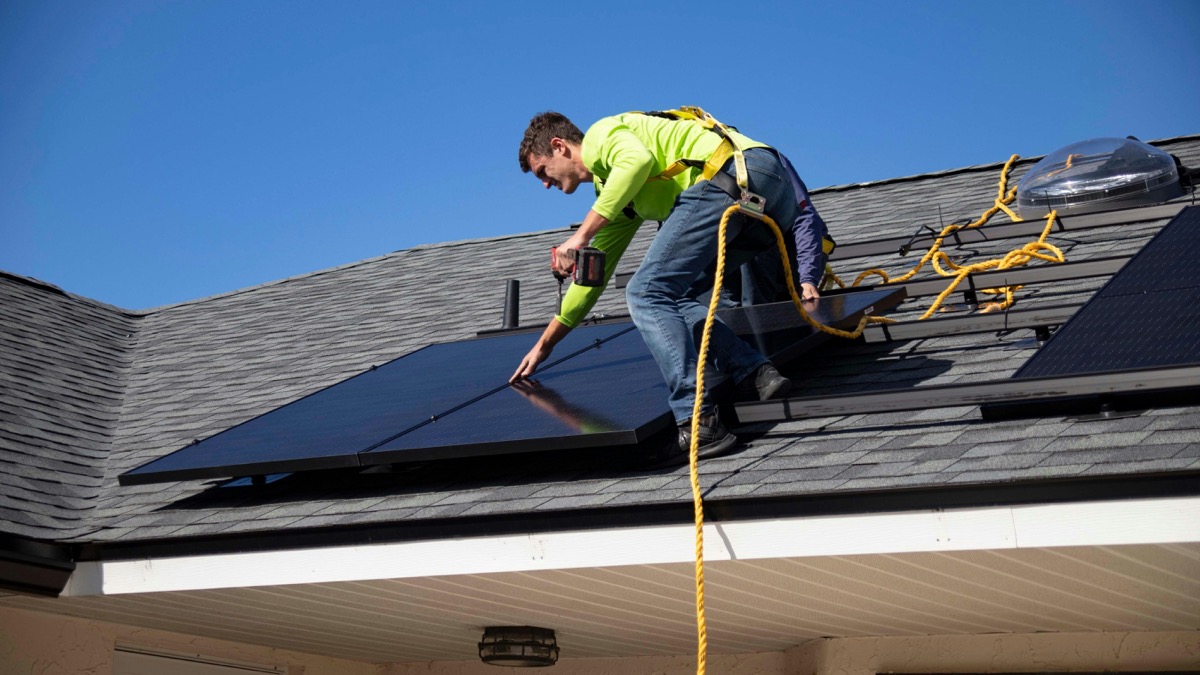
I have spent most of this year looking at who asks for solar in Northern Ireland: I have read all 394 quote requests that came through this site between 12 March and 22 September 2026, and I run the /solar-today/ tracker, which has modelled daily generation in seven NI towns from recorded weather since January. What I did not have was the official count of how many systems are actually going on roofs here, so I went to the source data. I checked every figure below on 23 September 2026.
This page replaces three older pages on this site that said installs were “growing” without a dated number. Here are the dated numbers.
The headline figures
The best public count of NI solar is the Department for Energy Security and Net Zero’s monthly Solar Photovoltaics Deployment release. The latest edition was published on 27 August 2026 and covers the end of July 2026. It added a table by UK region this summer, which makes the NI series much easier to read.
| Measure, end of July 2026 | Northern Ireland | UK | NI share |
|---|---|---|---|
| Solar installations | 36,873 | 2,105,059 | 1.75% |
| Solar capacity | 417.6 MW | 22,992 MW | 1.8% |
| Domestic installations | 32,172 | 1,742,568 | 1.8% |
| Domestic capacity | 166.0 MW | 6,984 MW | 2.4% |
Source: DESNZ, ET 6.3 Solar PV deployment, July 2026 data (Table 3 for domestic, Table 4 by region). The next release is due on 29 September 2026.
Two things stand out. Nearly nine in ten NI installations are on homes (32,172 of 36,873), but homes hold only about 40% of the capacity, because the solar farms and commercial roofs are far bigger per site. And the average NI domestic system on the register is 5.16 kW (166.0 MW across 32,172 systems), which fits what shows up in quotes: 4kW to 6kW is the normal NI home system.
How fast it is growing
This is the part the older pages got wrong by leaving it vague. Year-end counts for NI from the same DESNZ series:
| Year | NI installations at year end | Added that year |
|---|---|---|
| 2016 | 22,881 | |
| 2017 | 23,809 | 928 |
| 2018 | 24,208 | 399 |
| 2019 | 24,580 | 372 |
| 2020 | 24,828 | 248 |
| 2021 | 25,489 | 661 |
| 2022 | 27,297 | 1,808 |
| 2023 | 29,332 | 2,035 |
| 2024 | 31,449 | 2,117 |
| 2025 | 34,380 | 2,931 |
| 2026 (to end of July) | 36,873 | 2,493 |
A few things to read out of that:
- 2026 is running well ahead of 2025. NI added 2,493 installations in the first seven months of 2026, against 1,642 in the same months of 2025, about 52% more. June 2026 alone added 500, the busiest single month for NI since September 2016.
- 2018 to 2021 were close to a standstill. The Northern Ireland Renewables Obligation closed to new solar on 31 March 2017, and NI never had the Feed-in Tariff that paid GB households for generation. With no scheme to pay for generation, NI added 248 systems in the whole of 2020.
- The recovery since 2022 has happened with no grant. There is still no grant most NI households can get for solar (the one exception is NISEP’s small, income-limited Toasty Homes scheme). What changed is the price of electricity: Power NI’s domestic rates run from 32.10p to 34.15p per kWh including VAT since 1 July 2026, and the NI market ranges from 29.83p to 42.01p (Consumer Council, 6 September 2026).
NI still grows more slowly than the UK as a whole. The UK installation count rose 15.7% in the year to July 2026; NI’s rose 11.4% (from 33,091 to 36,873).
One caution: the latest month is always provisional. DESNZ revises earlier months as late registrations arrive, and earlier editions of this page quoted a March 2026 count of 35,138 that the current release now puts at 35,262. It also notes that small unsubsidised systems not registered with MCS may not be counted at all.
Where the domestic systems are
DESNZ breaks the domestic count down by Westminster constituency. For NI’s 18 constituencies at the end of July 2026:
| Constituency | Domestic installations | Capacity (MW) |
|---|---|---|
| South Down | 2,410 | 12.9 |
| Lagan Valley | 2,382 | 12.5 |
| Strangford | 2,309 | 12.0 |
| South Antrim | 2,238 | 12.0 |
| Fermanagh and South Tyrone | 2,156 | 12.0 |
| West Tyrone | 2,122 | 11.1 |
| East Londonderry | 2,106 | 11.0 |
| East Antrim | 2,008 | 10.3 |
| North Antrim | 1,981 | 10.6 |
| Newry and Armagh | 1,965 | 10.0 |
| Upper Bann | 1,960 | 9.8 |
| Mid Ulster | 1,918 | 12.3 |
| North Down | 1,566 | 7.8 |
| Foyle | 1,327 | 4.7 |
| Belfast South and Mid Down | 1,175 | 5.9 |
| Belfast North | 922 | 3.7 |
| Belfast East | 858 | 4.1 |
| Belfast West | 769 | 3.0 |
The pattern is what you would guess from the housing. The rural and suburban constituencies, with more detached houses and bigger roofs, have two to three times the count of the Belfast seats, where terraces and flats dominate. Mid Ulster has fewer systems than Lagan Valley but almost the same capacity, which suggests larger systems on farms and rural homes.
How much electricity it makes
The Department for the Economy’s quarterly Electricity Consumption and Renewable Generation in Northern Ireland release, published on 3 September 2026, covers the year to June 2026:
- Renewables generated 4,431 GWh, equal to 50% of NI’s gross final electricity consumption of 8,865 GWh, up from 44% a year earlier.
- Wind made up 74% of that renewable generation, bioenergy 18% and solar 6%.
So solar is still a small slice of NI’s power, and most of the growth in the renewable share comes from wind. For a household, though, the national share is beside the point. What matters is what a roof produces, and that is what the tracker models.
What a system here would have produced in 2026
The /solar-today/ tracker models a 4kW and a 6kW system in seven towns from the radiation recorded each day. From 1 February to 22 September 2026, the modelled output of a 4kW system was:
| Town | 4kW, 1 Feb to 22 Sep 2026 | 6kW, same period |
|---|---|---|
| Newry | 2,409 kWh | 3,614 kWh |
| Belfast | 2,373 kWh | 3,561 kWh |
| Lisburn | 2,302 kWh | 3,454 kWh |
| Armagh | 2,265 kWh | 3,396 kWh |
| Ballymena | 2,181 kWh | 3,271 kWh |
| Enniskillen | 2,171 kWh | 3,257 kWh |
| Derry | 2,138 kWh | 3,207 kWh |
The gap between the best and worst town is about 13%. The full month-by-month record and the method are on the 2026 generation page, and the payback those numbers imply is worked through in are solar panels worth it in NI.
What the demand looks like from this site
The official data counts systems once they are fitted. The quote requests that come through this site show the people who are still deciding. Between 12 March and 22 September 2026 there were 394 of them. Aggregate figures only:
- Property: 249 detached, 85 semi-detached, 34 bungalows, 18 terraces, 6 commercial and 2 farms. Detached houses are 63% of requests, which matches the constituency table: the demand sits where the bigger roofs are.
- Bills: 262 said they pay £100 to £250 a month for electricity, 66 under £100 and 54 over £250 (12 were unsure).
- What they want: 378 asked about panels and 346 about battery storage. In NI a battery is part of the first conversation, not a later add-on. 91 asked about EV chargers and 37 about heat pumps.
- Timing: 151 wanted it within a month (75 “right away”, 76 within one to four weeks), 117 within two to six months, 17 in six months or more, and 109 only wanted a rough price.
- Where: requests came from across NI. The 24 postcode districts with five or more requests span counties Antrim, Armagh, Down, Londonderry and Tyrone; no single Fermanagh district reached five. The busiest district had 12.
The fuller breakdown, month by month, is on what NI homeowners want from solar.
What I could not verify
I went looking for three other sources and want to be straight about what I found:
- MCS Data Dashboard. MCS publishes installation data at mcscertified.com, but the dashboard needs an account to view, so I have not quoted from it. The DESNZ domestic figures above are built largely from the MCS installations database, so they are the same underlying records.
- NIE Networks. NIE Networks handles the G98 and G99 connection notifications for every NI system and publishes a network capacity map, but on 23 September 2026 I could not find a published count of small-scale generation connections on its website. If it publishes one, I will add it.
- Installer numbers. Earlier versions of this page said the number of NI installers had “roughly doubled”. There is no official source for that, so it is gone.
What it means if you are thinking about solar
Three practical points from the numbers:
- You are not early. There are 32,172 homes in NI with registered solar, and more than 2,000 in each of the busiest constituencies. Any installer quoting you should be able to show you recent local jobs.
- 4kW to 6kW is the well-worn path. The average NI domestic system is 5.16 kW. Kit, pricing and the NIE Networks paperwork are routine at that size. A system that needs more than about 3.68kW of inverter on a single phase goes through G99, so NIE Networks has to approve it before it is connected.
- 2026 is busy. More systems went in during the first seven months of 2026 than in any full year from 2017 to 2024. That shows up in lead times, which are covered in solar installation wait times in NI.
I will update this page after each DESNZ release. The next one is due on 29 September 2026.

Written by Connor McAuley
Founder and editor of Compare Solar NI. Connor writes the site's Northern Ireland solar guides and runs its weather-based generation tracker. He does not install panels or sell hardware.
Meet the person behind the site · How we make moneyQuestions readers ask
How many solar panel installations are there in Northern Ireland?
36,873 at the end of July 2026, with 417.6 MW of capacity, according to the Department for Energy Security and Net Zero's Solar Photovoltaics Deployment release published on 27 August 2026. Of those, 32,172 are recorded as domestic, with 166.0 MW between them. The figures are provisional and get revised as late registrations come in.
Is solar growing in Northern Ireland?
Yes, and faster in 2026 than in any recent year. NI added 2,493 installations between January and July 2026, against 1,642 in the same seven months of 2025, an increase of about 52%. Across the whole of 2025 NI added 2,931 installations, the most of any calendar year since 2016.
How many homes in Northern Ireland have solar panels?
DESNZ records 32,172 domestic solar installations in Northern Ireland at the end of July 2026. These are systems registered with MCS or on the old Feed-in Tariff register, so a small number of unregistered systems will be missing. The highest counts by constituency are South Down (2,410), Lagan Valley (2,382) and Strangford (2,309); the lowest is Belfast West (769).
What share of UK solar installations is in Northern Ireland?
1.75% of UK installations (36,873 of 2,105,059) and about 1.8% of UK capacity (417.6 MW of 22,992 MW) at the end of July 2026, on the DESNZ figures.
How much of Northern Ireland's electricity comes from solar?
A small but real share. The Department for the Economy reported on 3 September 2026 that renewables generated 4,431 GWh in the year to June 2026, equal to 50% of NI's electricity consumption, and that solar made up 6% of that renewable generation. Wind made up 74%.
Why did solar installations in Northern Ireland stall after 2017?
The Northern Ireland Renewables Obligation closed to new solar on 31 March 2017, and NI never had the Feed-in Tariff that drove the GB boom. The DESNZ series shows NI adding only 248 installations in the whole of 2020. Growth returned from 2022 as electricity prices rose, with no grant involved.
Where does the Northern Ireland solar installation data come from?
The main source is the DESNZ monthly Solar Photovoltaics Deployment release, which combines the MCS installations database, the Renewables Obligation and Feed-in Tariff registers, a survey of major power producers and planning data. MCS runs its own Data Dashboard, but it needs an account to view. NIE Networks publishes a network capacity map, but I could not find a published count of small-scale connections.
Your next step
See what your options cost.
Request quotes from participating Northern Ireland installers. Compare the equipment, installation and aftercare. You decide whether to proceed.
Are Solar Panels Worth It in Northern Ireland? The 2026 Numbers
Payback for a 4kW and 6kW system in Northern Ireland, built on this site's own 2026 generation tracker corrected for a pitched roof, at the calculator's 33.1p and three real NI unit rates. When solar is worth it, when it is not, and what it means if you heat with oil. Checked 23 September 2026.
What 368 Northern Ireland Homeowners Told Us When They Asked for Solar Quotes
Original data from 368 solar quote requests submitted in Northern Ireland between March and early September 2026: property type, electricity bill, buying timeline, battery and EV interest, and month-by-month volume.
How Much Solar Panels Really Generated in Northern Ireland in 2026, Month by Month
Modelled NI solar generation for 2026: 4kW and 6kW output for seven towns, February to September, plus year-to-date totals, best and worst days, and the method behind the numbers.