
Comparison
Best Solar Panels for Northern Ireland: What Local Installers Actually Fit (2026)
Which solar panels NI installers name on their own websites, checked on 23 September 2026: Aiko, Q Cells, JA Solar, Jinko and Trina. Warranties, coastal and farm certification, and why the installer matters more than the brand.
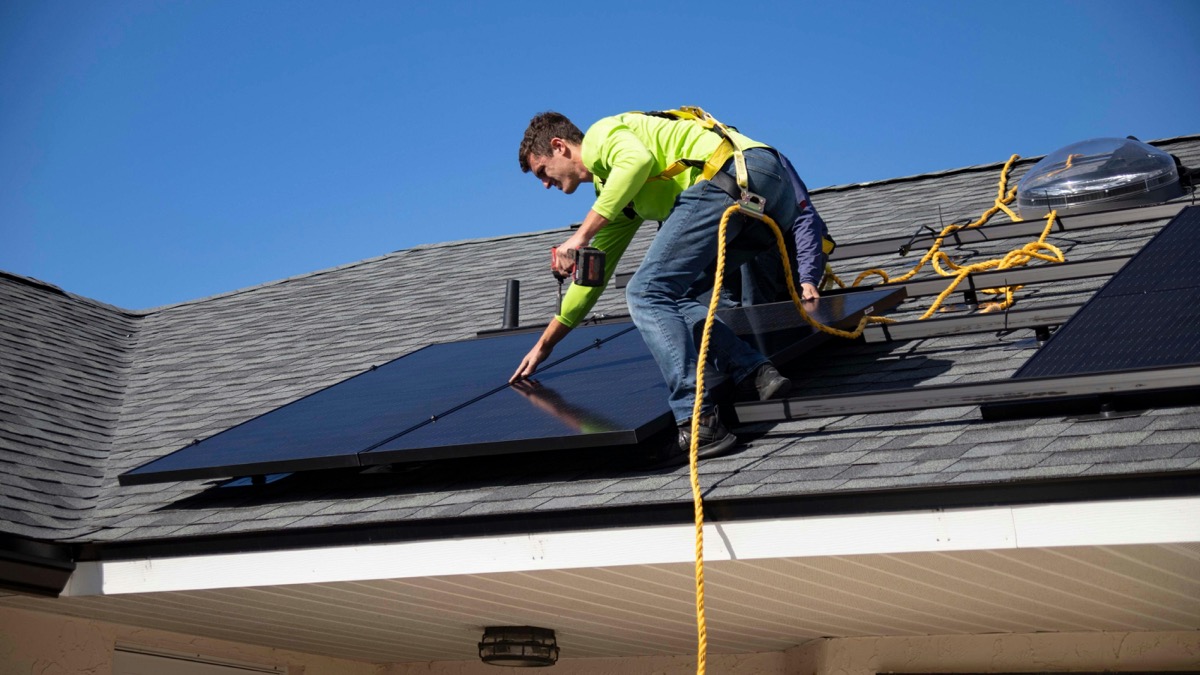
On 23 September 2026 I went through the websites of all 13 installers listed in this site’s installer directory and wrote down every solar panel brand each one names. I did it because every “best solar panels” list I could find for Northern Ireland was a copy of a Great Britain list, ranking brands that nobody here seems to fit.
What the installers actually name is shorter and more useful. Four of the 13 name a panel brand. Nine name none, which means you only find out what goes on your roof when the quote lands. This page covers the panels that do appear, what their warranties really say, the two certificates that matter on the coast and on farms, and why I think the installer matters more than any of it.
The short answer
For a normal NI house, any of the monocrystalline panels below is a sound choice: Aiko, Q Cells, JA Solar, Jinko Solar or Trina Solar. They are the brands NI installers put their name to. Pick the installer first, then check the exact panel model, its UK datasheet and its warranty on the quote. If you live within sight of the sea or you are fitting panels to a livestock shed, ask for the salt-mist and ammonia test certificates covered further down.
What NI installers name on their own websites
Checked on 23 September 2026. Most of these brands appear as logos, not in the text, so a logo tells you who an installer promotes, not necessarily what they fit as standard.
| Installer | Panels named | Inverters named | Batteries and other kit named |
|---|---|---|---|
| One of this site’s quote partners (Belfast) | Aiko (mostly) | Not named on the pages I read | EcoFlow, myenergi Eddi and Zappi |
| Clover Energy Systems | Aiko, Jinko Solar | SolarEdge, Sigenergy | GivEnergy, Sigenergy, Tesla Powerwall, EcoFlow, myenergi |
| HS Renewables | Q Cells, Trina Solar | Solis, SolarEdge | Dyness, PureDrive, myenergi |
| Solarfix NI | JA Solar, Q Cells | SolarEdge, Solis | BYD, Duracell Energy, Tesla Powerwall, PureDrive, myenergi |
| Encom Energy | No brand (“well established global manufacturers”) | Solis, Victron, SolarEdge, SMA | BYD, PylonTech, Rosen |
| EECO, Surge Renewables, Bluebuild, bee SOLAR, DSA Solar, Solid Power, Start Solar, Suno Solar | No panel brand named | Surge shows a Solis logo | EECO is a Duracell approved installer |
The first row is one of the installers that currently receive quote requests sent through this site (see how this site works), so treat it as one installer’s choice, not my recommendation. Its website says it installs mostly Aiko monocrystalline panels with a 25-year product and 30-year performance warranty. Its cost guide puts the gap between budget and premium panels at roughly £400 to £800 on a typical home install.
One note on the batteries column: GivEnergy, whose logo still appears on one site, went into administration on 9 April 2026. The battery storage guide covers what that means.
Two things stand out. Aiko, a brand most GB lists leave out, is named by two NI installers. And SolarEdge and Solis are named more often than any panel brand, which suggests installers care more about the inverter they put their name to than the panel.
The panels, one by one
I have kept this to what the manufacturers’ own datasheets say, read on 23 September 2026, for one residential model from each brand.
| Brand and model I checked | Product warranty | Performance warranty | Salt mist / ammonia on datasheet |
|---|---|---|---|
| Aiko Neostar 3N54 (470 to 495W) | 25 years | 30 years | Not listed |
| Trina Vertex S+ NEG9R.28 | Up to 25 years | 30 years | IEC 61701 and IEC 62716 listed |
| Jinko Tiger Neo 54HL4-(V) | 12 years | 30 years | Claims “high salt mist and ammonia resistance”, standards not listed |
| LONGi Hi-MO X10 Explorer | 15 years | 30 years | Not listed |
| JA Solar DeepBlue 4.0 JAM54D40 | 25 years, but a footnote limits that to Australian homes | 30 years | Not listed |
LONGi is not named on any NI installer site I checked. I included it because it sits near the top of most GB lists.
Aiko. The Neostar range uses all-back-contact cells, meaning the wiring sits behind the cell rather than across the front. That gives the highest efficiency on this list: 24.8% at the top of the 3N54 range. Aiko’s residential warranty (version 1.7.2) promises no more than 1% loss in year one and 0.35% a year after, leaving at least 90.6% of rated output at year 25 and 88.85% at year 30. That is a better degradation promise than most.
Q Cells. Named by HS Renewables and Solarfix NI. Q Cells is owned by the South Korean Hanwha group. I did not read a Q Cells datasheet for this check, so check the model and warranty on your quote.
JA Solar. Named by Solarfix NI. Watch the warranty. The DeepBlue 4.0 datasheet I read offers a 25-year product warranty, but a footnote restricts that to residential rooftops in Australia. Ask your installer for the UK warranty document before you assume 25 years.
Jinko Solar. Named by Clover Energy Systems. The Tiger Neo is a common n-type panel with a 12-year product warranty and 30-year performance warranty. Twelve years is the shortest product cover here, which matters because a defect claim after year 12 falls to the performance warranty, and that only covers output, not a cracked backsheet.
Trina Solar. Named by HS Renewables. The Vertex S+ datasheet was the only one I read that lists both IEC 61701 (salt mist) and IEC 62716 (ammonia) by name, which makes it the easy answer for a coastal or farm roof.
The NI angle GB guides miss: salt, ammonia and wind
Two international tests matter more here than in most of Great Britain, because so many NI homes sit near the sea or next to livestock.
- IEC 61701 tests a panel’s resistance to corrosion from salt mist. The current edition was published by the IEC in June 2020 (IEC webstore). If your roof faces the sea at Portrush, Ballycastle, Newcastle, Donaghadee or anywhere on the Ards Peninsula, this is the one to ask about.
- IEC 62716 tests resistance to ammonia in wet air (IEC webstore). The IEC does not mention farms, but ammonia-rich damp air is exactly what comes off a slatted cattle house or a poultry unit. If the panels are going on or beside a farm building, ask for it. There is more on farm roofs in the solar panels for farms guide.
A manufacturer can leave a test off the datasheet even when the panel has passed it, so if the line is missing, ask the installer for the certificate.
Wind is the other NI factor, and it is a mounting question more than a panel one. Of the sites I checked, only Encom and one of this site’s quote partners said anything about wind loading. On an exposed site, ask what rail and hook system is being used, whether the fixings are stainless, and whether the installer has done a wind-load calculation for your roof.
Why efficiency is not the number to chase
This is the point most brand lists get wrong. A panel’s efficiency tells you how much power it makes per square metre, not per kilowatt. A 4kW system made of 24% panels and a 4kW system made of 21% panels will generate close to the same amount of electricity on the same roof. The more efficient system just uses fewer, smaller panels to get there.
I can put a number on what a 4kW system does here, because I run the /solar-today/ tracker, which models daily output for seven NI towns from measured sunlight. From 24 January to 22 September 2026, a 4kW south-facing system modelled 2,389 kWh in Belfast and 2,155 kWh in Derry, the lowest of the seven. That 11% gap between two towns is bigger than anything the panel brand is likely to change at the same kW rating. The tracker models a flat reference plane, so a tilted roof does better: corrected for tilt, a full year from a south-facing 4kW system comes to about 3,330 kWh (see system sizes and costs).
So pay for efficiency only when roof space is the limit: a small terrace roof, a dormer, a bungalow with a lot of Velux windows. On a big detached roof, a cheaper panel and one more of them usually gets you the same kWh for less money. The monthly figures are in the 2026 generation record.
Warranty and service for an NI address
A 25 or 30-year warranty is only as good as the route to claim on it. Three things I would check on any quote:
- Whose warranty is it? The manufacturer’s warranty covers the panel. The installer’s workmanship guarantee covers the job. The installer that receives this site’s quote requests states a 5-year insurance-backed workmanship guarantee on its homepage. Ask how long each installer’s lasts and whether it is insurance-backed if they go out of business.
- Does it cover labour? Replacing a faulty panel means scaffolding. Ask whether the manufacturer or the installer pays for that, or whether you do.
- Is it the UK warranty? The JA Solar footnote above shows that headline warranty terms can be market-specific. The document should say it applies to installations in the United Kingdom.
MCS certification matters too. An MCS certificate shows the system was designed and installed to the scheme’s standards by an MCS certified installer using MCS certified products (MCS). It is the paperwork installers and suppliers work from when you register for export payments, so make sure it is in the handover pack.
The installer matters more than the brand
Here is my view after building this site and reading the 394 quote requests that came through it between 12 March and 22 September 2026. The panel is the most commoditised part of the job. The things that decide whether your system performs for 25 years are the roof survey, how the array is split across roof faces, the inverter, the fixings on a windy gable, how the cables are run into the house, and whether the company is still around to fix it. A good installer fitting a mid-priced panel will beat a poor one fitting the most efficient panel on the market every time.
That is why I would choose the installer first and treat the panel as a line to check on the quote. Our guide to solar panel installers in Northern Ireland covers how to judge one, and the installer directory lists the NI firms by county.
What to ask for on a quote
- The exact panel model and wattage, not just the brand
- The UK datasheet and the UK warranty document
- Product and performance warranty years, and whether labour is covered
- IEC 61701 if you are near the coast, IEC 62716 if you are on or beside a farm building
- The inverter model and its warranty (see the inverter guide)
- The mounting system and fixings, and a wind-load calculation on an exposed roof
- The workmanship guarantee, its length and whether it is insurance-backed
With a £400 to £800 spread between budget and premium panels on a typical install, seeing two or three quotes with the model named on each is the only fair way to compare. If you want that without chasing installers yourself, you can request quotes here.

Written by Connor McAuley
Founder and editor of Compare Solar NI. Connor writes the site's Northern Ireland solar guides and runs its weather-based generation tracker. He does not install panels or sell hardware.
Meet the person behind the site · How we make moneyQuestions readers ask
What are the best solar panels for Northern Ireland?
There is no single best brand. When I checked the websites of the 13 installers in this site's directory on 23 September 2026, the panel brands they named were Aiko, Q Cells, JA Solar, Jinko Solar and Trina Solar. All are monocrystalline and all will work on an NI roof. What separates a good system from a poor one here is the design, the mounting and the installer who stands behind it, not the logo on the panel.
Which solar panels do NI installers use?
Of the 13 installer websites I checked on 23 September 2026, four named a panel brand. Aiko appeared on two (Clover Energy Systems and the installer that currently receives this site's quote requests), Q Cells on two (HS Renewables and Solarfix NI), and JA Solar, Jinko Solar and Trina Solar on one each. The other nine named no panel brand at all, so you only find out what they fit when the quote arrives.
Do more efficient solar panels generate more electricity in Northern Ireland?
Not per kilowatt installed. A 4kW array of 21% panels and a 4kW array of 24% panels produce close to the same kWh on the same roof, because the rating already accounts for efficiency. Higher efficiency means fewer, smaller panels for the same kW, which matters when roof space is tight. It does not make a 4kW system behave like a 5kW one.
Are solar panels OK near the sea in Northern Ireland?
Yes, but ask for proof of salt-mist testing if you live on the coast. The test is IEC 61701 (current edition 2020). Of the datasheets I read on 23 September 2026, Trina's Vertex S+ listed IEC 61701 and IEC 62716 by name. Jinko claimed salt mist and ammonia resistance without listing the standard, and the Aiko, LONGi and JA Solar datasheets I checked did not mention either. Mounting and fixings matter as much as the glass.
What warranty should solar panels have in NI?
Look at two numbers. The product warranty covers defects and runs from 12 to 25 years depending on brand: Jinko's Tiger Neo datasheet says 12, LONGi's Hi-MO X10 says 15, Trina's Vertex S+ says up to 25 and Aiko's Neostar says 25. The performance warranty guarantees output and is 30 years on all four. Terms differ by country, so ask for the UK version.
Does the solar panel brand really matter?
Less than people expect. Between well-known tier-one brands, the difference over 25 years is a few per cent of output. Roof direction, shading, a sound mounting system and an installer who will still be answering the phone in year eight all move the result more than the brand does.
Are Chinese solar panels any good?
Yes. Every brand I found named on an NI installer's website is made by a Chinese or Chinese-owned manufacturer apart from Q Cells, which is owned by the South Korean Hanwha group. They sell 30-year performance warranties in the UK. Judge a specific model on its UK datasheet and warranty, not its country of origin.
Your next step
See what your options cost.
Request quotes from participating Northern Ireland installers. Compare the equipment, installation and aftercare. You decide whether to proceed.
How to Choose a Solar Panel Installer in Northern Ireland (2026)
How to vet a solar installer in Northern Ireland: verifying MCS certification, what a proper quote should contain, the questions to ask, and the red flags.
Solar Panel Warranties Explained: What NI Homeowners Need to Know
Understanding solar panel warranties in Northern Ireland. Performance guarantees, workmanship cover, inverter warranties, and what to check before you buy.
Solar Panel Inverters Explained: String vs Micro vs Hybrid
Understanding solar panel inverters for NI homes. How they work, which type you need, costs, lifespan, and the best inverter brands.