
Comparison
Solar System Sizes in Northern Ireland: 3kW to 10kW Compared
What each solar system size costs, generates and saves in Northern Ireland, using 225 days of modelled output from our own Belfast tracker. 3kW to 10kW.
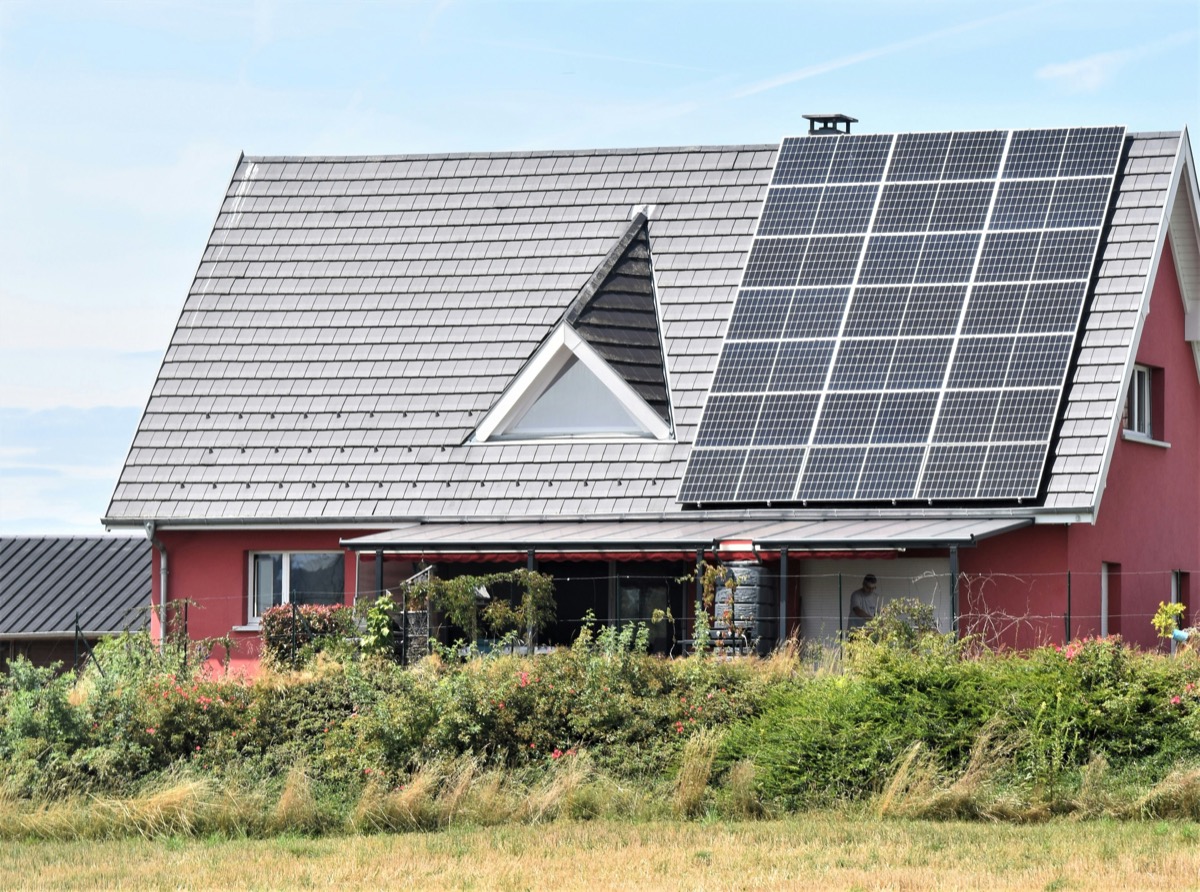
What size solar system do I need in Northern Ireland?
Sizing gets decided by two things: the usable roof you have, and how much electricity you actually use while the sun is up. It does not get decided by the biggest number an installer can fit on the rafters. Every kilowatt you fit above what you can use or store gets exported, and NI has no Smart Export Guarantee, so export is paid voluntarily by suppliers. Power NI pays 11.88p per kWh for export (tariff year 1 October 2026 to 30 September 2027; the rate resets each October, see solar export payments), against an import price of 32.10p to 34.15p on Power NI’s rates from 1 July 2026.
I built this site, and I run the Solar Today tracker that models daily output for seven NI towns. The numbers below come out of that tracker rather than out of a national rule of thumb, and I have shown the working so you can check it.
| System size | Panels (400W to 450W) | Roof area needed | Installed cost in NI, 2026 | Annual generation | Annual saving | Simple payback |
|---|---|---|---|---|---|---|
| 3kW | 7 to 8 | 14 to 16 m² | £5,000 to £6,500 | 2,500 kWh | £535 | 11 years |
| 4kW | 9 to 10 | 18 to 21 m² | £6,000 to £8,000 | 3,330 kWh | £714 | 10 years |
| 5kW | 11 to 13 | 23 to 26 m² | £7,000 to £9,500 | 4,160 kWh | £892 | 9 years |
| 6kW | 14 to 15 | 28 to 31 m² | £8,000 to £12,000 | 5,000 kWh | £1,071 | 9 years |
| 8kW | 18 to 20 | 37 to 41 m² | £11,000 to £14,000 | 6,660 kWh | £1,258 | 10 years |
| 10kW | 23 to 25 | 46 to 51 m² | £14,000 to £18,000 | 8,320 kWh | £1,484 | 11 years |
Generation is anchored on PVGIS’s long-term model for a south-facing pitched roof in Belfast and cross-checked against the tracker’s modelled output. Savings use the same assumptions as our solar calculator: units used at home are worth 33.1p, exported units earn 11.88p, and 45 per cent of the output is used at home for 3kW to 6kW, falling to 33 per cent at 8kW and 28 per cent at 10kW. Payback uses the mid-point of each cost range and ignores future price rises, which shorten it. All prices carry 0% VAT, which applies to domestic installations until 31 March 2027 and then reverts to 5%.
What the tracker modelled for Belfast
The tracker pulls daily shortwave radiation from Open-Meteo for each town and converts it to output using energy = radiation × system size × performance ratio, with the performance ratio set at a deliberately conservative 0.78. It values savings at 33.5p per kWh, Power NI’s standard credit rate when the tracker was set up.
Here is Belfast, every tracked day from 24 January to 5 September 2026.
| Month, 2026 | Days tracked | 4kW output | 6kW output | Sunshine hours a day |
|---|---|---|---|---|
| January (24th to 31st) | 8 | 17 kWh | 25 kWh | 3.3 |
| February | 28 | 86 kWh | 129 kWh | 2.9 |
| March | 31 | 213 kWh | 320 kWh | 5.0 |
| April | 30 | 348 kWh | 523 kWh | 7.7 |
| May | 31 | 415 kWh | 623 kWh | 7.0 |
| June | 30 | 369 kWh | 554 kWh | 6.3 |
| July | 31 | 489 kWh | 734 kWh | 9.1 |
| August | 31 | 291 kWh | 436 kWh | 4.5 |
| September (1st to 5th) | 5 | 35 kWh | 53 kWh | 3.6 |
| Total | 225 | 2,263 kWh | 3,396 kWh |
Two things there are worth pausing on. June came in below May, at 369 kWh against 415 kWh, because June 2026 was duller in Belfast than May was. The days from 24 January to 12 February were corrected on 23 September 2026 from the Open-Meteo archive, after the live weather feed had returned no data for them and zeros had been stored. The best single day was 21 June: 24.8 kWh on a 4kW array, 37.2 kWh on a 6kW, off 15.55 hours of sunshine.
Scaling 225 days to a full year
Pro-rating 2,263 kWh across 365 days would give 3,671 kWh, which is nonsense, because the 140 days missing from the window are the darkest of the year. Instead I filled the gaps from the tracker’s own modelled months.
| Period | How it was filled | 4kW | 6kW |
|---|---|---|---|
| 24 Jan to 5 Sep | Tracker (modelled) | 2,263 kWh | 3,396 kWh |
| 6 to 30 Sep | 25 days at the 7.1 kWh a day modelled for 1 to 5 Sep | 177 kWh | 266 kWh |
| October | 31 days at March’s modelled 6.9 kWh a day | 213 kWh | 320 kWh |
| November | 30 days at February’s modelled 3.1 kWh a day | 92 kWh | 138 kWh |
| December | 31 days at half February’s rate | 48 kWh | 71 kWh |
| 1 to 23 January | 23 days at half February’s rate | 35 kWh | 53 kWh |
| Full year | 2,828 kWh | 4,244 kWh |
October is paired with March and November with February because they sit at matching points either side of midwinter. December and early January get half of February.
Why the headline table shows more than 2,828 kWh
PVGIS (European Commission, SARAH3 2005 to 2023) puts a 4kWp array in Belfast, tilted 35 degrees due south, at 3,675 kWh a year at 14 per cent losses; at the tracker’s more cautious 0.78 performance ratio that is 3,333 kWh, which is the 3,330 kWh in the master table (5,000 kWh for 6kW). The tracker is the cross-check: scaled to a full year on a flat plane, 2026 comes to 2,828 kWh against PVGIS’s long-term 2,759 kWh flat at the same ratio, so 2026 ran about 2.5 per cent above the 19-year average, mostly on the back of a strong July.
The difference between 2,828 kWh and 3,330 kWh is the roof. The tracker uses radiation on a horizontal plane, because that is what the weather feed provides, and your panels will not be flat. If your roof faces east or west, take some of the pitched-roof gain back off.
The 4kW versus 6kW gap, and when it turns up
Across those 225 tracked days the 6kW array produced about 1,130 kWh more than the 4kW. The useful question is which months that extra arrives in.
| Month, 2026 | Extra output from 6kW over 4kW, Belfast |
|---|---|
| January (24th to 31st) | 8 kWh |
| February | 43 kWh |
| March | 107 kWh |
| April | 175 kWh |
| May | 208 kWh |
| June | 185 kWh |
| July | 245 kWh |
| August | 145 kWh |
| September (1st to 5th) | 18 kWh |
May, June, July and August account for 783 kWh of it, which is 69 per cent of the extra output for the year. February and March together account for 150 kWh, or 13 per cent.
The extra capacity shows up almost entirely in the four months when your house needs the least electricity and daylight already outruns demand. On 21 June the tracker had the 6kW array at 37.2 kWh in a single day. A household getting through 10 kWh a day with a 5 kWh battery might absorb 15 of those units. The other 22 exported, and 22 units at 11.88p is £2.61 where the same 22 units used in the house would have been worth £7.29.
That is the argument for sizing to daylight usage rather than roof capacity, and for a battery before extra panels once you get past about 4kW. Our guide to the best home battery brands in NI covers the sizing.
3kW systems
Seven to eight panels, 14 to 16 square metres, £5,000 to £6,500 installed. About 2,500 kWh a year on a south-facing pitch.
This suits a one or two-bed home, a small terrace, or a household under 2,500 kWh a year. It is also the size you land on when the only decent roof face is small. Scaffolding, the inverter and a day of labour cost roughly the same whether there are seven panels up there or fourteen, so the cost per kW is the worst on this page. If the roof takes 4kW and the usage justifies it, 4kW is better value per pound.
4kW systems
Nine to ten panels, 18 to 21 square metres, £6,000 to £8,000 installed. About 3,330 kWh a year.
This is still the default recommendation across the NI installer network, and it fits the housing stock. A typical three-bed semi has 18 to 22 square metres of usable rear roof, which is exactly a 4kW array at modern panel ratings. There is a dedicated guide for that property type: solar panels for a 3 bed semi in NI.
The other reason 4kW keeps coming up is the grid connection. A 4kW array with a 3.68kW inverter stays inside the free G98/NI route, which is covered further down.
5kW systems
Eleven to thirteen panels, 23 to 26 square metres, £7,000 to £9,500 installed. About 4,160 kWh a year.
This is the step up for a three or four-bed detached where somebody is home during the day, or where an EV charger is going in soon. The cost per kW is better than 4kW, and the payback comes out a year shorter on the table above. It crosses the 3.68kW inverter threshold, so factor in the NIE Networks application.
6kW systems
Fourteen to fifteen panels, 28 to 31 square metres, £8,000 to £12,000 installed. About 5,000 kWh a year.
Six kilowatts makes sense for a large detached house running an EV, a heat pump or electric hot water, and it makes much better sense with a battery than without one. The price range is the widest on this page because the equipment choices widen at this size, so the spread between quotes is at its largest here.
Across 368 quote requests through this site since March, 235 came from detached houses. That is 64 per cent, and it is why 6kW comes up more often in my inbox than the 4kW default would suggest. It reflects who asks for quotes rather than NI’s housing stock.
Compare quotes from MCS-certified installers across NI, free, no obligation. Start here.
8kW systems
Eighteen to twenty panels, 37 to 41 square metres, £11,000 to £14,000 installed. About 6,660 kWh a year.
You are past what a standard semi or terrace can carry here, and into large detached houses, farmhouses and rural properties with outbuildings. The output exceeds almost any household’s daylight demand, so an 8kW array with no battery and no large controllable load such as EV charging or an immersion diverter will export most of its summer generation. It also needs a G99/NI route, which carries a fee.
10kW systems
Twenty-three to twenty-five panels, 46 to 51 square metres, £14,000 to £18,000 installed. About 8,320 kWh a year.
The top of the domestic range, and the point where the case usually rests on something other than household consumption: a home business, a farm, several EVs, or a heat pump running through the winter. The payback in the table is about 11 years, and that is with self-consumption at 28 per cent, so nearly three quarters of the output earns the 11.88p export rate rather than saving 33.1p. If the export rate falls at a future October reset, this size loses more than any other.
How the savings figures are built
Generation is not the saving. What you avoid paying for is the saving, and that depends on how much of your own output you use at the moment it is produced.
| Size | Annual generation | Assumed self-consumption | Value at 33.1p | Export at 11.88p | Annual saving |
|---|---|---|---|---|---|
| 3kW | 2,500 kWh | 45% | £372 | £163 | £535 |
| 4kW | 3,330 kWh | 45% | £496 | £218 | £714 |
| 5kW | 4,160 kWh | 45% | £620 | £272 | £892 |
| 6kW | 5,000 kWh | 45% | £745 | £326 | £1,071 |
| 8kW | 6,660 kWh | 33% | £728 | £530 | £1,258 |
| 10kW | 8,320 kWh | 28% | £772 | £712 | £1,484 |
The 3kW to 6kW rows use the calculator’s flat 45 per cent so the two agree. In practice the same household absorbs a smaller share of a bigger output, so if you are out all day the 5kW and 6kW rows flatter you. The 8kW and 10kW rows, which the calculator does not cover, use lower shares for that reason. The calculator assumes a battery lifts the share used at home to 75 per cent; on a 4kW system that takes the saving from £714 to about £926 a year, for a battery costing £3,000 to £5,000 on the calculator’s range.
The 33.1p is the midpoint of Power NI’s published domestic unit rates from 1 July 2026, which run from 32.10p to 34.15p per kWh including VAT depending on tariff and payment method. If your unit rate is higher, recalculate the middle column at your own rate and the paybacks shorten. Export is valued at 11.88p, the rate Power NI pays from 1 October 2026 to 30 September 2027. That rate resets each October and other suppliers set their own, so the export column is the one most likely to move. The Smart Export Guarantee is Great Britain legislation and does not extend here. Our guide to solar export payments in NI has the current rates.
Inverter sizing and the NIE Networks threshold
This is the part of sizing that gets skipped in most guides, and it can change what you are allowed to connect.
The rule is set by NIE Networks and it is about the inverter, not the panels. In their own words: if your new equipment exports a maximum of 3.68kW on single phase, or under 11.04kW on three phase, or under 16 Amps per phase, then G98/NI applies; above this value the G99/NI rules apply. Almost every NI home is single phase, so 3.68kW is the number that matters.
G98/NI is the micro-scale route and it works on fit and inform. There is no application fee for a G98/NI Stage 1, and your installer has 30 days from commissioning to submit the Stage 1 commissioning form. Nobody waits on an approval before the scaffolding goes up.
G99/NI Fast Track is the streamlined route above that threshold. NIE Networks sets it at a Total Installation Capacity of up to 60 Amps per phase with a maximum inverter of 32 Amps, which they state as 13.8kW capacity with a 7.36kW inverter ceiling. Most domestic systems from 5kW to 10kW land here.
G99/NI proper covers anything beyond the Fast Track limits and involves a network study, a connection design and a quotation pack you have 90 days to accept. NIE Networks charges an application fee for every generation application except G98/NI, and for G99/NI and Fast Track that fee depends on system size, set either from Schedule 2 of the Statement of Connection Charges or from the outturn cost of the studies.
Two practical consequences. An installer can fit a larger array behind a smaller export-limited inverter to keep the job inside G98/NI, which is a common way to get more panels on a roof without a chargeable application. And NIE Networks describes the G98/NI boundary in terms of what the equipment exports, while the Fast Track bands are written in terms of Total Installation Capacity, so ask your installer which basis NIE is applying to your job before you assume a 5kW array is a simple notification. Our guide to solar panel inverters explains how export limiting works.
Start from the bill, not the roof
Of the 368 quote requests that have come through this site since March, 246 reported a monthly electricity bill of £100 to £250. At Power NI’s current rates that is roughly 3,400 to 9,000 kWh a year, which is a range wide enough to justify anything from 4kW to 10kW. A bill band is not a system size.
The other pattern in those requests is batteries. 323 of the 368 asked about battery storage alongside panels, and 83 mentioned an EV charger. Both change the sizing answer, because both raise the share of your own generation you can actually use.
Three checks, in order:
- Pull twelve months of kWh off your bills or your supplier account. Not the pounds, the units.
- Work out how much of that you use between roughly 9am and 5pm. If the house is empty on weekdays, that share is small and a battery matters more than extra panels.
- Measure the roof face you would actually use. Length by width, minus chimneys, vents and velux windows, then divide by 2 square metres per panel.
Our guide on how many solar panels you need works through that calculation with examples, and the full cost breakdown for NI covers what each line of a quote should contain.
Then get three quotes and compare the system size each installer proposes, not only the price. If two out of three land on the same size, that is a reasonable signal. If one comes in a great deal larger, ask which of your annual kWh it expects you to use rather than export, and check the answer against the monthly pattern in the tracker table above.

Written by Connor McAuley
Founder and editor of Compare Solar NI. Connor writes the site's Northern Ireland solar guides and runs its weather-based generation tracker. He does not install panels or sell hardware.
Meet the person behind the site · How we make moneyQuestions readers ask
What size solar panel system do I need in Northern Ireland?
Two things decide it: the usable roof area you have and how much electricity you use during daylight. A 4kW system needs 18 to 21 square metres and suits a household using 3,000 to 4,000 kWh a year. Above 5,000 kWh a year, or with an EV charging at home, 5kW or 6kW starts to earn its keep. Sizing above what you can use or store means exporting at 11.88p per kWh (Power NI's rate from 1 October 2026) instead of saving the 32p to 34p you pay to import.
How much does a 4kW solar system cost in Northern Ireland?
£6,000 to £8,000 fully installed in 2026, with £7,000 a common mid-point. That covers panels, inverter, mounting, wiring, scaffolding, the NIE Networks connection paperwork and MCS certification. Domestic solar carries 0% VAT until 31 March 2027, after which the rate reverts to 5%.
How much electricity does a 4kW system generate in Northern Ireland?
PVGIS, the European Commission's long-term solar model, puts a 4kW array tilted 35 degrees due south in Belfast at roughly 3,330 kWh a year at our cautious performance ratio, and roughly 5,000 kWh for a 6kW. Our Belfast tracker is the cross-check: it modelled 2,263 kWh from a 4kW array on a flat reference plane over the 225 days from 24 January to 5 September 2026, and scaled to a full year that runs about 2.5 per cent above PVGIS's long-term flat-plane figure.
How many solar panels are in a 6kW system?
Fourteen to fifteen panels at the 400W to 450W ratings NI installers fit in 2026, needing 28 to 31 square metres of usable roof. A 4kW system is nine to ten panels and 18 to 21 square metres. Older 330W panels need more of both, which is why panel counts quoted a few years ago look higher.
Do I need permission for a solar system above 3.68kW in Northern Ireland?
You need a different NIE Networks route, not planning permission. NIE Networks states that if your equipment exports a maximum of 3.68kW on single phase, under 11.04kW on three phase, or under 16 Amps per phase, the G98/NI rules apply. Above that value the G99/NI rules apply. G98/NI has no application fee and works on a fit and inform basis. G99/NI and G99/NI Fast Track both carry an application fee.
Is a 6kW solar system too big for a normal house?
It depends on when you use electricity, not on the size of the house. Our Belfast tracker shows the extra output of a 6kW over a 4kW is about 1,130 kWh across 225 days, and 69 per cent of that extra arrives in May, June, July and August. If nobody is home in the daytime and there is no battery, most of the extra summer generation exports at 11.88p per kWh (Power NI's rate from 1 October 2026).
How much roof space do I need for solar panels in NI?
Allow roughly 2 square metres per panel plus room at the edges and around vents, chimneys and velux windows. That is 14 to 16 square metres for 3kW, 18 to 21 for 4kW, 28 to 31 for 6kW and 46 to 51 for 10kW. A typical NI three-bed semi has 18 to 22 square metres of usable rear roof.
Can I add more solar panels later?
You can, but it costs more than fitting them at the start. A second visit means scaffolding again, and the extra capacity may push the installation past the 3.68kW G98/NI threshold, which turns a free fit and inform into a chargeable G99/NI application. If your usage is likely to rise, size for that at the first installation.
Your next step
See what your options cost.
Request quotes from participating Northern Ireland installers. Compare the equipment, installation and aftercare. You decide whether to proceed.
Solar Panel Costs in Northern Ireland: 2026 Prices by System Size
Solar panel prices in Northern Ireland from £5,000 to £12,000. See costs by system size (3kW to 6kW), what is included, battery add-on prices, and how to reduce your bill.
How Many Solar Panels Do I Need? Calculator & Guide for NI Homes
Work out how many solar panels your Northern Ireland home needs. Based on your electricity usage, roof space, and budget. Simple guide with examples.
Solar Panels for a 3 Bed Semi in NI
What solar panel system suits a 3 bed semi-detached house in Northern Ireland? Costs, system sizes, roof space, and real savings for NI homeowners.